
Kenya Real Estate Laws
Top 10 Real Estate Laws in Kenya (2025)
1. Land Act, 2012 (No. 6 of 2012)
→ The Bible of Kenyan Land Law
What it covers:
- Types of land tenure (freehold, leasehold, community, public)
- Rights & obligations of landowners
- Compulsory acquisition (by government)
- Land administration (Ministry of Lands, NLC)
Why it matters:
→ Defines who can own what — foreigners can only hold leasehold (max 99 years)
→ Protects community land from illegal grabs
→ Sets rules for land use, development, and dispute resolution
💡 Key Section: Section 79 — Leasehold titles automatically renewable unless notice given.
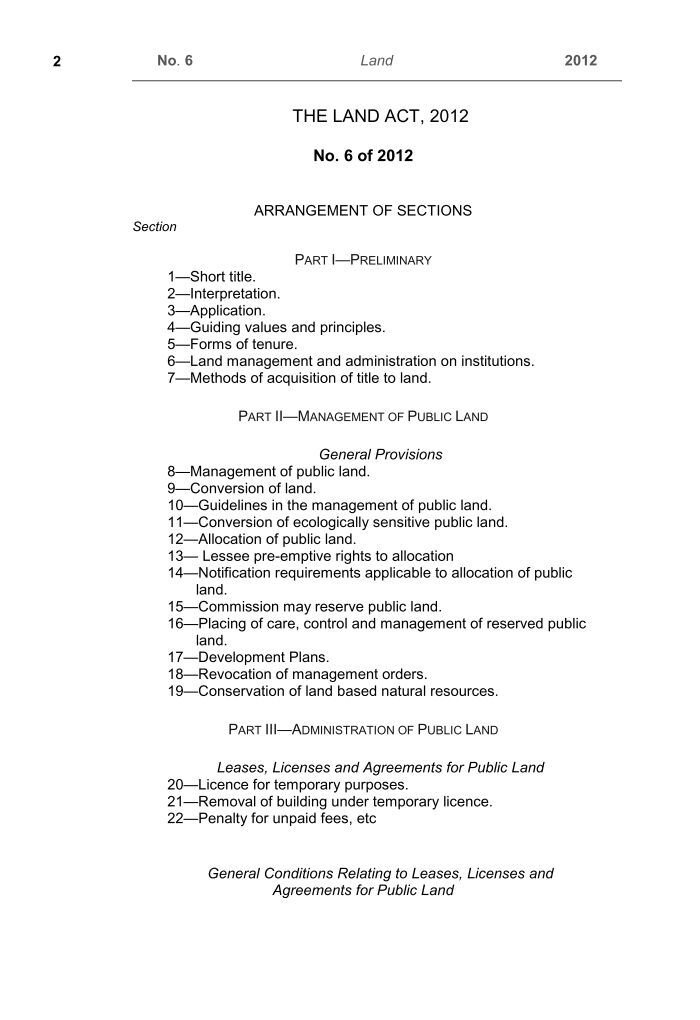
2. Land Registration Act, 2012 (No. 3 of 2012)
→ How Land Ownership is Officially Recorded
What it covers:
- Registration of title deeds at Lands Registry
- Effect of registration (indefeasibility of title)
- Cancellation, rectification, caveats
- Electronic registration (e-Citizen integration)
Why it matters:
→ Only registered owner = legal owner. “Agreement for Sale” is NOT ownership.
→ Caveats can freeze transfers — essential for buyers after deposit.
→ All transactions must be registered to be enforceable.
🛡️ Pro Tip: Always conduct an OFFICIAL SEARCH (Ksh 500) before paying deposit.

3. Sectional Properties Act, 2020 (No. 7 of 2020)
→ The Law for Apartments, Flats & Units
What it covers:
- Creation of sectional titles (individual ownership of units + shared common areas)
- Rights & duties of unit owners
- Management by Owners Association
- Developer obligations (issue titles within 90 days of occupation)
Why it matters:
→ If you buy a flat, you MUST get a Sectional Title Deed — not just an “allotment letter.”
→ Developers who delay titles can be fined or forced to refund + 8% interest.
→ Owners Associations can sue for mismanagement of common areas.
⚖️ Recent Case: High Court ordered developer to issue titles + pay Ksh 5M in damages for 2-year delay.

4. Physical Planning Act (Cap 286, Revised 2012)
→ Where You Can Build — and What You Can Build
What it covers:
- County physical development plans
- Zoning (residential, commercial, industrial)
- Building plan approval process
- Penalties for unauthorized development
Why it matters:
→ You can’t build a factory in a residential zone — even if you own the land.
→ No approved plans = no occupation certificate = illegal structure.
→ Counties can demolish non-compliant buildings (see GTC fire aftermath).
🚫 Red Flag: Agent says “Don’t worry about approvals — we’ll sort it.” Walk away.
5. Environmental Management and Co-ordination Act (EMCA), 1999 (No. 8 of 1999)
→ The Green Light for Development
What it covers:
- Environmental Impact Assessment (EIA) for projects >10 units or near rivers/forests
- NEMA licensing & enforcement
- Public participation in development decisions
- Penalties for environmental violations
Why it matters:
→ No NEMA license = no construction. Period.
→ Buyers can cancel purchase if EIA not done — and get full refund.
→ Fines up to Ksh 4M or 4 years jail for violations.
🌿 Pro Tip: Ask for EIA license number — verify at nema.go.ke
6. Rent Restriction Act (Cap 296, Revised 2012)
→ Tenant & Landlord Rights in Controlled Areas
What it covers:
- Rent increase limits (max 10% every 2 years in Nairobi, Mombasa, Kisumu)
- Eviction procedures (90-day notice minimum)
- Landlord’s duty to maintain premises
- Rent Tribunal for disputes
Why it matters:
→ Landlords can’t hike rent arbitrarily — even if market rates rise.
→ Tenants can sue for “constructive eviction” if premises are uninhabitable.
→ Security deposits must be refundable (minus damages).
🏠 Applies to: Residential premises with rent under Ksh 25,000/month in controlled areas.

7. Stamp Duty Act (Cap 480, Revised 2012)
→ The Tax on Property Transfers
What it covers:
- Stamp duty rates (4% buyer, 2% seller on transfer value)
- Exemptions (family transfers, court orders)
- Penalties for undervaluation
- Electronic stamping via e-Citizen
Why it matters:
→ No stamped title = no legal transfer at Lands Registry.
→ KRA now cross-checks declared value with bank deposits — under-declaring = audit + penalty.
→ Pay via e-Citizen → instant e-stamp certificate.
💰 Buyer pays 4% — always budget for this. No “side deals” to avoid tax.
8. Capital Markets Act (Cap 485A, Revised 2012)
→ The Law for REITs, Crowdfunding & Property Securities
What it covers:
- Licensing of REITs & fund managers (e.g., Fahari I-REIT)
- Investor protection rules
- Disclosure requirements (annual reports, audits)
- Penalties for unlicensed offerings
Why it matters:
→ Only CMA-licensed REITs are legal — avoid “REIT-like” products from developers.
→ Investors can sue for misrepresentation or non-disclosure.
→ Crowdfunding platforms must be licensed by CMA.
📊 Check CMA register: www.cma.or.ke/investment-products
9. National Construction Authority Act, 2011 (No. 37 of 2011)
→ Who Can Build — and How
What it covers:
- Registration of contractors & developers
- Building standards & codes
- Issuance of completion certificates
- Penalties for unregistered construction
Why it matters:
→ No NCA certificate = no legal occupancy. Banks won’t finance.
→ Developers must issue certificate within 90 days of completion.
→ Buyers can withhold final payment until certificate issued.
🏗️ Verify developer: nca.go.ke/verify-contractor
10. Data Protection Act, 2019 (No. 24 of 2019)
→ Your Privacy in the Digital Property Market
What it covers:
- Consent for collecting/using personal data (phone, email, ID)
- Rights to access, correct, delete your data
- Penalties for breaches (up to Ksh 5M or 1% of revenue)
Why it matters:
→ Agents must get your consent before WhatsApp/SMS marketing.
→ You can sue for spam or data leaks.
→ Developers must protect your ID, PIN, bank details.
📵 Unsubscribe? Yes — and they must comply within 7 days.

⚠️ 5 Common Legal Pitfalls — And How to Avoid Them
1. ❌ Buying Land Without Official Search
→ Always conduct search at Lands Registry — verify no caveats, charges, or court cases.
2. ❌ Accepting “Agreement for Sale” as Ownership
→ Only title deed transfer at Lands Registry = legal ownership. Insist on it.
3. ❌ Skipping NEMA or County Approvals
→ No approvals = demolition risk. Verify before paying deposit.
4. ❌ Under-Declaring Property Value to Avoid Tax
→ KRA auto-audits via bank/M-Pesa data — penalties + interest + blacklisting.
5. ❌ Hiring Unlicensed Agent or Unregistered Developer
→ Verify EARB license + NCA registration — or risk fraud with no recourse.
🏡 Your Legal Rights as a Property Buyer or Tenant
👉 As a Buyer:
✔️ Right to full disclosure (encumbrances, approvals, defects)
✔️ Right to cancel if developer misses deadlines (Sectional Properties Act)
✔️ Right to warranty (2 years for new builds under NCA)
✔️ Right to sue for misrepresentation (Consumer Protection Act)
👉 As a Tenant:
✔️ Right to 90-day notice before eviction (Rent Restriction Act)
✔️ Right to habitable premises (water, sanitation, safety)
✔️ Right to receipts for all payments
✔️ Right to challenge unfair rent hikes (max 10% every 2 years)
🛡️ Always use a lawyer — your agent is not your legal advisor.
❓ Frequently Asked Questions (FAQs)
Q: Can foreigners own land in Kenya?
A: Only on 99-year leasehold. Freehold requires a Kenyan-registered company.
Q: What if the seller refuses to transfer title?
A: Sue for “specific performance” — court can force transfer + award damages.
Q: Can I cancel an off-plan purchase?
A: Yes — if developer delays beyond 6 months (Sectional Properties Act) — get refund + 8% interest.
Q: Are digital signatures legal for property contracts?
A: Yes — under Electronic Transactions Act — if both parties consent and identity verified.
Q: Where can I get free legal aid for property issues?
A:
- Kituo cha Sheria → www.kituochasheria.org
- Law Society of Kenya (LSK) Pro Bono → www.lsk.or.ke
- County Justice Centers → Free in Nairobi, Mombasa, Kisumu